
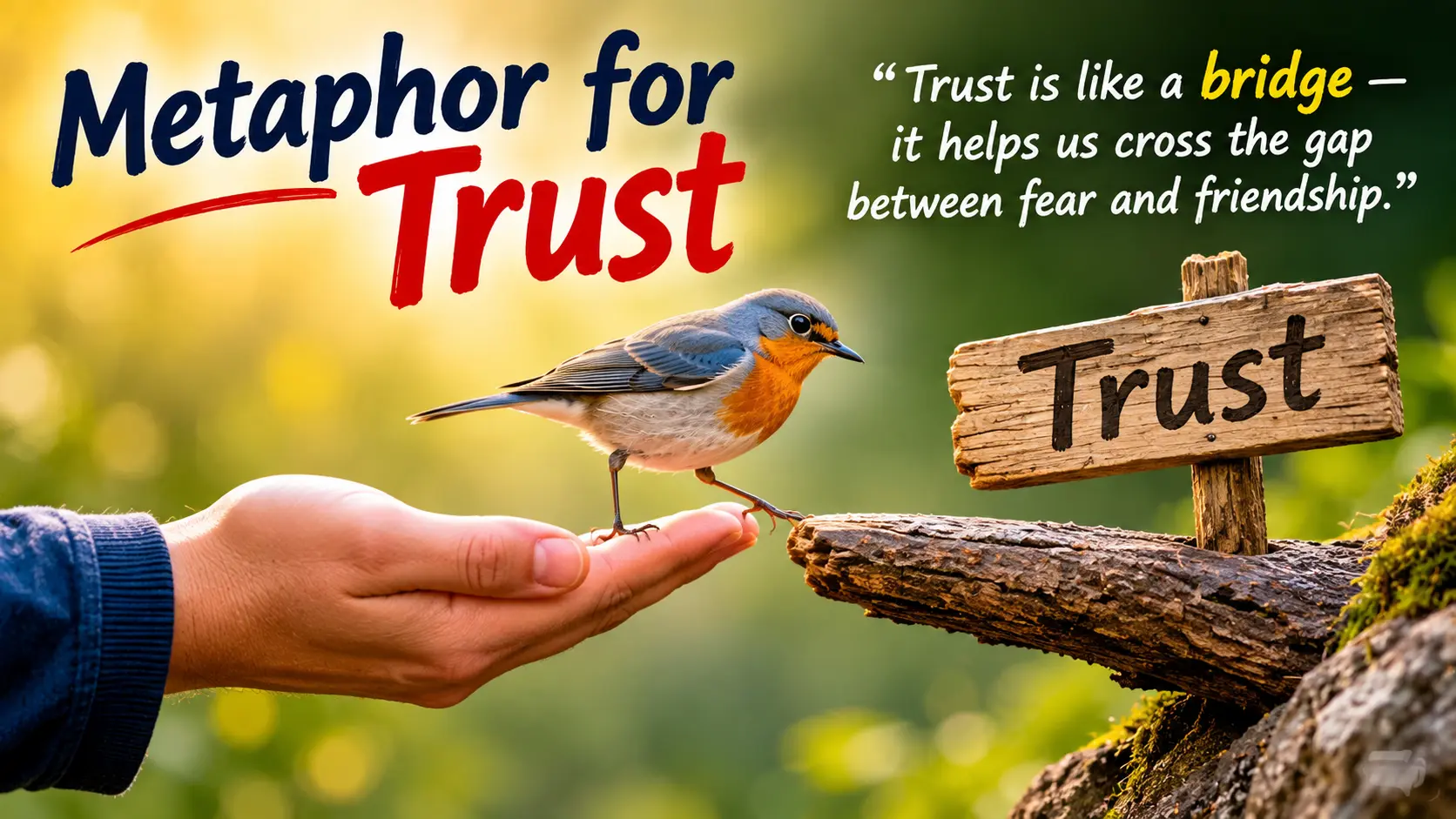
Alternate title 1: Metaphors for Trust: 25 Images That Explain It Best
Alternate title 2: 25 Powerful Metaphors for Trust and What They Mean
A metaphor for trust describes an invisible feeling through a concrete, physical image so the reader can feel its weight. Writers often reach for a bridge, which carries connection, a glass window, which carries fragility, a foundation, which carries stability, and a bank account, which carries slow, steady growth. Each image gives trust a shape the reader can picture.
Strongest Metaphor for Trust
The strongest metaphor for trust is this: trust is a bridge. A bridge works only when both ends hold their weight, and trust behaves the same way. Cross it carelessly, and the whole structure can shake. Build it slowly, plank by plank, and it can carry real weight for years. This image works because it shows trust as something built jointly, never handed over by one side alone.
Several other metaphors carry almost the same strength. Trust is a foundation that supports strong relationships and everything built upon them.
Like a glass window, trust can develop a crack from a single mistake, making it difficult to restore.
Think of trust as a bank account: small, consistent deposits build its value, while one major withdrawal can quickly drain it.
A thread is another way to describe trust, showing how something seemingly fragile can still hold significant weight.
Metaphors for Trust: 25 Examples and Meanings
This list mixes familiar expressions most readers already know with a handful of fresher, original images. Every original metaphor is marked clearly so nothing here is mistaken for an old saying.
| Metaphor | Meaning | Metaphor | Meaning |
|---|---|---|---|
| Bridge | Connects two sides | Foundation | Stable base for everything |
| Glass window | Fragile and easily cracked | Bank account | Built slowly through deposits |
| Thread | Thin, yet holds real weight | Fortress | Strong, protective, hard to breach |
| Seed | Needs time to grow | Mirror (original) | Reflects honesty back clearly |
| Key | Opens doors others cannot | Rope | Holds steady under strain |
| Garden (original) | Needs regular, patient care | Currency | Valuable and carefully spent |
| Glue | Holds separate pieces together | Lighthouse (original) | Guides others safely home |
| Net (original) | Catches you when you fall | Candle flame (original) | Warm, but easily blown out |
| Vase (original) | Breaks and rarely mends fully | Anchor | Keeps you steady in a storm |
| Compass | Points toward what is right | House of cards | Collapses from one small lie |
| Well | Deep, and slow to refill | Shield | Protects you from real harm |
| Scar (original) | Marks where trust once broke | Tightrope | Balance held with no safety net |
| Window | Lets others see in clearly | Handshake (bonus) | A sealed, spoken agreement |
The strongest entries on this table all connect a plain, physical image to a clear feeling. A bridge feels active and shared, while a glass window feels passive and breakable. A bank account grows slowly through effort, while a house of cards falls apart in one single moment. Pairing a concrete object with a specific emotion is what makes each image memorable.
Metaphors for Trust and What They Express
Safety and Protection
Writers reach for this group when trust needs to feel like shelter from something dangerous or uncertain.
Trust is a fortress that keeps outside threats from reaching the people inside it. She felt like she lived inside a fortress once he gave her his word.
Trust is a shield that a person carries into situations that could otherwise hurt them. His promise worked like a shield the night everything else went wrong.
Trust is an anchor that holds a person steady even while everything else moves. When the diagnosis came, her calm voice became my anchor.
Loyalty and Belonging
This group fits moments when trust is less about safety and more about choosing someone again and again.
Trust is a rope that two people hold on opposite ends, pulling together instead of apart. We held that rope through three house moves and two layoffs.
Trust is a key that only certain people ever get handed. Giving him that key felt bigger than giving him an actual house key.
Trust is glue that keeps a group from scattering after hard years. Grandma’s calm trust in all of us was the glue at every holiday table.
Fragility and Betrayal
Use this group when a writer needs to show how easily trust can crack or shatter completely.
Trust is a glass window that looks fine until one hit sends a crack across the whole pane. One lie put a crack straight down the middle of our glass window.
Trust is a vase (original) that can be glued back together but never sits quite the same way again. We repaired the vase, yet I still see the hairline crack every day.
Trust is a house of cards that stands only as long as nobody touches the wrong card. His one excuse brought the whole house of cards down in a single night.
Growth and Patience
This group suits slow, quiet trust that builds gradually instead of arriving all at once.
Trust is a seed that needs steady weather before it becomes anything visible. Every small kept promise was another drop of water on that seed.
Trust is a bank account that grows through small, repeated deposits rather than one grand gesture. Years of small deposits let me finally trust him with something big.
Trust is a garden (original) that rewards daily attention and punishes long neglect. Our friendship, like any garden, needed weeding after that long silent year.
Metaphors for Trust and Change
Trust rarely stays fixed. It shifts as people grow, make mistakes, and choose each other again, which makes it one of the richest topics for a changing image.
Some metaphors capture that movement better than static ones like a wall or a rock ever could. Trust is a river that can run calm for years and suddenly flood after one storm. Our trust ran like a quiet river until that one bad year flooded it. Trust is a scar (original) that fades over time but never disappears completely, reminding both people what happened. The scar faded, though we both still remember exactly where it started. Trust is a tightrope that gets easier to walk the longer two people practice together. After ten years, that tightrope finally felt less like a performance and more like home.
Positive and Negative Metaphors for Trust
Not every metaphor for trust is warm. Writers also reach for darker, more guarded images when trust has already failed.
Warm, positive metaphors include:
- Bridge: connection built by both sides
- Foundation: stability for everything above it
- Anchor: steadiness during hard moments
- Lighthouse (original): safe guidance through confusion
- Garden (original): care that grows over time
Darker, negative metaphors include:
- Glass window: one hit and it cracks
- House of cards: collapses from a single lie
- Scar (original): pain that fades but stays visible
- Vase (original): repaired, yet never quite the same
- Tightrope: no safety net if balance fails
Darker metaphors tend to work best in fiction, poetry, and memoir, where the goal is showing pain honestly instead of offering comfort.
Five Simple Metaphor Examples for Trust
These five work well for a quick assignment, a short speech, or a simple piece of personal writing.
- Bridge: something built together over time
- Glass window: something that cracks under pressure
- Bank account: something that grows through small deposits
- Anchor: something that holds steady in a storm
- Seed: something that needs patience before it shows results
Together these five cover five different feelings instead of repeating one single idea about trust.
Metaphor for Trust and Love
Romantic trust often needs softer, more personal images than trust between coworkers or strangers. A love-focused metaphor usually points toward closeness, shared vulnerability, or quiet daily choices.
Metaphors that fit romantic trust well include:
- Bridge: built slowly by two people
- Vase (original): delicate and worth protecting carefully
- Rope: held from both ends at once
- Candle flame (original): warm, but easy to blow out
She said loving him felt like holding a lit candle flame through every storm that came their way.
Metaphor for Broken Trust
Broken trust needs its own set of images, since it describes damage rather than growth. These metaphors work well in memoir, breakup writing, and reflective essays.
Fitting images for broken trust include:
- Glass window: cracked but still visible
- House of cards: collapsed in one moment
- Vase (original): glued, yet never flawless again
- Scar (original): healed, but permanently marked
After the betrayal, our trust looked like a glass window with a crack running straight through the middle.
Trust Metaphor Poem Ideas
A poem works best when one single image carries the whole piece instead of switching comparisons every line.
The Vase (original example poem)
You handed it to me with careful hands, and I set it gently on the shelf of us. One careless word, and it slipped and cracked. I knelt down slow and gathered every piece. Now it holds water again, though not quite the same, and I love it more for the lines that show.
This poem follows the vase from gift, to break, to repair, letting one object carry grief, guilt, and quiet hope without introducing a second comparison. A writer could build a second poem on the river image instead, following trust from a calm current through one sudden flood and back to a slower, steadier flow.
What Is Trust a Metaphor For?
Trust usually stands in for safety, connection, vulnerability, loyalty, control, and hope. A single image can shift meaning depending on who is speaking and what just happened in the story.
Context changes everything. A bridge in a story about two estranged siblings suggests reconciliation, while the same bridge in a story about a soldier might suggest a dangerous crossing with no way back. A writer describing a child learning to trust a parent might reach for a seed, while a writer describing a betrayed business partner might reach for a glass window instead. The image stays simple, but the feeling it carries depends entirely on the surrounding story.
What’s a Fancy Way of Saying Trust?
Some situations call for a more literary or formal word than plain old trust.
- Confidence: formal, professional tone
- Faith: warm, often spiritual tone
- Reliance: neutral, slightly technical tone
- Assurance: formal, legal-sounding tone
- Credence: literary, slightly old-fashioned tone
- Conviction: strong, emotional tone
- Dependence: neutral, practical tone
- Belief: warm, personal tone
Choose the word by matching its tone to the mood of the sentence around it. A legal document calls for assurance, while a love letter calls for faith.
What Are Some Idioms About Trust?
- Take someone at their word: believe what they say without proof
- Give someone the benefit of the doubt: assume good intent despite uncertainty
- Break someone’s trust: damage the relationship through dishonesty
- Trust your gut: rely on instinct rather than evidence
- Put your faith in someone: rely fully on another person
These five are genuine, established expressions still used in everyday American English, not invented for this article.
Metaphor vs. Simile for Trust
Metaphor: Trust is a bridge.
Simile: Trust is like a bridge.
A metaphor states the comparison directly, as if trust and the bridge are the same thing, which creates a stronger, more immediate image. A simile uses the word like or as, which softens the comparison and reminds the reader they are reading a description rather than a statement of fact. Metaphors tend to work better in poetry and emotional writing, while similes often read more naturally in casual conversation or explanatory writing.
Choosing the Right Metaphor for Trust
Pick the image according to the specific feeling you want the reader to experience, not just the general idea of trust.
| If trust means… | Choose imagery such as… | Best for… |
|---|---|---|
| Safety | Fortress, shield, anchor | Memoir, comfort writing |
| Slow growth | Seed, garden, bank account | Reflective essays |
| Fragility | Glass window, vase | Breakup or betrayal scenes |
| Connection | Bridge, rope, handshake | Relationship writing |
| Guidance | Lighthouse, compass | Mentorship stories |
| Collapse | House of cards | Dramatic turning points |
| Lasting pain | Scar | Healing or recovery writing |
| Risk | Tightrope | High-stakes scenes |
| Change over time | River | Long relationship arcs |
The strongest metaphor is always the one that gets the intended meaning across without needing a follow-up explanation.
FAQs
What is a good metaphor for trust?
A bridge works well as a strong, flexible metaphor for trust because it shows two sides building something together over time. A glass window also works well when the goal is showing how easily trust can crack. The best choice depends on whether the writing needs a hopeful or a cautionary feeling.
What are five metaphor examples for trust?
Five solid examples are a bridge, a glass window, a bank account, an anchor, and a seed. Each one highlights a different quality, from careful construction to slow growth to sudden fragility. Together they cover most of the common feelings writers want to express about trust.
What is trust a metaphor for?
Trust often represents safety, connection, loyalty, and hope within a story or relationship. The exact meaning shifts with context, so the same image can suggest comfort in one scene and risk in another. Reading the surrounding sentences usually makes the intended meaning clear.
What’s a fancy way of saying trust?
Words like confidence, faith, reliance, and credence all work as more formal or literary alternatives to trust. Confidence suits professional writing, while faith suits warmer, more personal writing. Choosing between them comes down to matching tone rather than meaning.
What is a metaphor for broken trust?
A cracked glass window or a shattered vase both work well as metaphors for broken trust, since both objects can be repaired but never fully return to their original state. A collapsed house of cards also fits well when the betrayal happened suddenly rather than slowly.
How do you use a trust metaphor in a love poem?
Pick one soft, personal image, such as a candle flame or a vase, and follow it through the whole poem instead of switching comparisons partway through. Let the image show both the warmth of love and the real risk of loss, since romantic trust usually carries both feelings at once.
Final Takeaway
A handful of images carry more weight than the rest.Trust is a bridge that represents a shared connection built through mutual understanding and effort.
When describing its fragile nature, a glass window makes a powerful comparison because even one crack can change everything.
To show how trust develops over time, think of it as a bank account where small, consistent efforts gradually build its value.
For poetry, follow one central image from beginning to end to create a stronger emotional connection.
When writing an essay, choose a metaphor that matches the tone and message of your argument.
In emotional writing, select an image that helps readers feel the true weight of trust rather than simply understand its meaning.

Abdullah writes about the quiet power of figurative language.
For him, a metaphor is not decoration — it is a bridge between hearts.
He built WishNeste to help every writer find the words they were searching for.

![FOCUS KEYWORD: [metaphor for soft] METAPHOR ARTICLE MASTER PROMPT 2.0 (Pressivo-Style) Meaning-First + Theme-Deep-Dive SEO for wishneste.com (USA readers) NOTE FOR THE OWNER: This prompt is deliberately DIFFERENT from Metaphor Article Master Prompt 1.0. Prompt 1.0 = 100 metaphors in 10 mood sections (bulk list style). Prompt 2.0 = one master table of 25 + deep theme sections (meaning-first style, like pressivomedia.com). Never mix the two structures in one article. HOW TO USE: 1. Type your keyword once on the FOCUS KEYWORD line at the very top of this prompt, the first line (example style: "metaphor for home", "metaphor for love"). 2. Everywhere below, [APNA KEYWORD YAHAN LIKHEIN] is that same keyword. Replace it automatically. 3. Never ask questions and never output placeholder brackets in the article. 4. Write the complete publish-ready article plus the SEO block in one pass, following sections A to K in order. 5. Keep the keyword's exact topic everywhere; never swap in an example word from this prompt. A. ROLE & GOAL You are an expert SEO content writer for a USA audience writing for wishneste.com. Your goal is a people-first article that deserves to rank fast for [APNA KEYWORD YAHAN LIKHEIN]. - Write 100% ORIGINAL metaphors unless a metaphor is a well-known established expression; in that case it is fine to use it, but in the master table mark original ones with "(original)" so readers are not misled. - Sound like a knowledgeable teacher and thoughtful friend, never like a machine. Simple American English, short sentences, short paragraphs, USA spelling. - BANNED words and phrases (never use anywhere): delve, tapestry, in today's fast-paced world, in conclusion, moreover, furthermore, it is important to note, as an AI, game-changer, unlock, elevate, journey, nestled, vibrant. - The em-dash character (—) is FORBIDDEN everywhere in the output, including table cells and list items. Use commas, periods, or a colon instead. - No emojis in titles or headings. B. TITLE - Exactly one H1. Format: Metaphor for [X]: 25 Meaningful Examples & Meanings (replace [X] with the keyword's topic word, keeping natural grammar; "Metaphors for [X]" plural is fine when it reads better). - The number in the title must match the master table count in section D (25 by default; if the topic honestly supports fewer strong metaphors, lower the number in BOTH places). - Below the H1, give 2 alternate title options, labeled "Alternate title 1:" and "Alternate title 2:". No emojis in any title. C. OPENING (strict rule, different from Prompt 1.0) - Do NOT write an "Introduction" heading. Do NOT write a story opening. - Start the article directly with ONE definitional paragraph of 40-70 words: define what a metaphor for [X] is, then name 3-4 example images in bold with the feeling each one carries. This paragraph is the featured-snippet target. - Immediately after it, write this H2: ## Strongest Metaphor for [X] - In 80-110 words, present the single strongest metaphor for the topic in bold (format: "[X] is a ..."), explain WHY it works in 2-3 sentences, then list 4-5 alternative strong metaphors in bold with a few words each on what each one emphasizes. - NEVER create a separate "Featured Snippet Answer" heading. D. MASTER TABLE (the heart of this format) - H2: ## Metaphors for [X]: 25 Examples and Meanings - One short intro sentence above the table saying the list mixes familiar expressions and original metaphors, and that originals are marked. - Then ONE table with exactly 4 columns, pairing two metaphors per row: | Metaphor | Meaning | Metaphor | Meaning | - 25 metaphors total (13 rows; the last row's second pair may be left as the 25th metaphor plus one related bonus metaphor, still labeled honestly). - Meanings in the table: 2-5 words only, like "Safety and rest". - Bold every metaphor inside the table. Mark original metaphors with "(original)" after the bold text. - After the table, add ONE short paragraph (40-60 words) explaining why the strongest metaphors work: each one connects a concrete image with an emotional quality. Give 2 quick contrasts from the table. E. THEME DEEP-DIVE SECTIONS (the bulk of the article) - Write exactly ONE H2: ## Metaphors for [X] and What They Express - Under it, create 4-5 H3 theme sections based on what the topic can mean. Pick themes that fit the keyword, for example: Safety and Protection, Love and Belonging, Memory, Identity, Growth, Strength, Freedom, Loss. Never force a theme that does not fit the topic. - Each H3 opens with ONE sentence saying what this group of metaphors emphasizes and when a writer would choose it. - Then 3-4 metaphors per H3, taken mostly from the master table (deep-dive the same core set; do not invent a second unrelated list). Format per metaphor: **[X] is a ...** followed immediately on the same line by a 1-2 sentence explanation of the image and the feeling it creates. Then one example sentence in italics on its own line, showing the metaphor used naturally in real writing. - Max 300 words per H3 section. - After the theme sections, add ONE more standalone H2 that develops the single most interesting angle of the topic (for example identity, growth, or change), with 2 short paragraphs and 3-4 metaphors in the same bold + explanation + italic example format. Title it with the angle, for example: ## Metaphors for [X] and Identity F. CONTRAST + QUICK LIST - H2: ## Positive and Negative Metaphors for [X] - One short intro sentence: not every metaphor for this topic is warm or kind; writers also use darker images. - Bullet list of 4-6 positive metaphors, each bold, followed by a comma or colon and a 4-8 word note on the feeling. - Bullet list of 4-6 negative or darker metaphors, same format. - One closing sentence on where darker metaphors work best (fiction, poetry, memoir, emotional writing). - H2: ## Five Simple Metaphor Examples for [X] - One intro sentence saying these five are the easiest picks for an assignment, speech, or short piece of writing. - Numbered list of exactly 5 metaphors from the master table, each bold, followed by a colon and a 3-6 word plain meaning. - One closing sentence noting that the five cover different meanings instead of repeating one idea. G. LONG-TAIL SUB-TOPIC SECTIONS - Write 2 short H2 sections that target natural long-tail variants of the keyword, chosen to fit the topic, for example: "Metaphor for [X] and Love", "Metaphor for [X] Memories", "Metaphors for [X] in Poetry". Only use variants that genuinely fit; never invent a variant nobody would search. - Each section: 60-100 words, one short paragraph of guidance on which images fit that sub-topic, then a bullet list of 4-5 fitting metaphors (bold + short note), then ONE italic example sentence. H. POEM IDEA - H2: ## [X] Metaphor Poem Ideas (adapt grammar to the topic) - One sentence of advice: a poem works best when ONE central image carries the whole poem instead of a new comparison in every line. - Then write ONE original short poem of 4-6 lines built on a single metaphor from the master table. Keep it simple and warm. Mark it clearly as an original example poem. - End with 2-3 sentences explaining how that one image develops across the poem, and name one alternative image a writer could build a second poem on. I. STANDALONE QUESTION SECTIONS (People-Also-Ask style, as H2 headings) Write these three H2 sections, adapting the wording to the topic: 1. ## What Is [X] a Metaphor For? (only when it makes sense for the topic; otherwise use ## What Does [X] Symbolize?) - 120-160 words: answer directly in the first sentence with the 4-6 main things the topic can represent, in bold. Then explain how context changes the meaning, with one short literary-style example. 2. ## What's a Fancy Way of Saying [X]? - One intro line, then a bullet list of 7-10 more elegant or literary alternative words for the topic word itself, each bold with a 3-6 word tone note (formal, warm, poetic, neutral). - One closing sentence on how to choose by tone. 3. ## What Are Some Idioms About [X]? - Bullet list of 4-6 established idioms or sayings connected to the topic, each bold with its plain meaning in one short line. - Only use idioms that truly exist. If the topic has fewer than 4 real idioms, say so honestly in one line and give the closest established expressions instead. Never invent an idiom. 4. ## Metaphor vs. Simile for [X] - Show the same image as a metaphor and as a simile, each bold on its own line (Metaphor: ... / Simile: ...). - 2-3 sentences explaining the difference simply, and when each one works better. J. CHOOSING TABLE + FAQs + FINAL TAKEAWAY - H2: ## Choosing the Right Metaphor for [X] - One intro sentence: choose the image according to the feeling you want the reader to experience. - Table with exactly 3 columns: | If [X] means... | Choose imagery such as... | Best for... | - 7-9 rows covering the topic's main meanings (draw them from the theme sections in E). - One closing sentence: the strongest metaphor is the one that communicates the intended meaning without a long explanation. - H2: ## Frequently Asked Questions - Write 5-6 questions as H3 headings (### **Question?**), each answered in 40-70 words, simple and direct. - Cover at least: What is a good metaphor for [X]? What are five metaphor examples for [X]? What is [X] a metaphor for? What's a fancy way of saying [X]? Plus 1-2 topic-specific questions (for example a love, memory, or poem variant when it fits). - Repeat answers in fresh words; never copy sentences from sections I or G word for word. - H2: ## Final Takeaway (never call it "Conclusion") - 90-130 words. Restate the 3-4 strongest metaphors in bold with the feeling each carries. Give one practical tip each for a poem, an essay, and emotional writing. End with one warm sentence about choosing the metaphor that makes the reader FEEL the meaning. K. SEO BLOCK + IMAGE (at the very end of the output) - SEO Title: max 60 characters, starts with or naturally includes the keyword. - Meta Description: max 160 characters, includes the keyword, ends with a call to action (example: "Pick your favorite and use it today."). - Focus Keyword: the exact keyword. - URL Slug: clean lowercase slug, for example /metaphor-for-home/ (match the keyword's natural singular or plural form). - Internal Link Suggestions: exactly 3, as plain lines in the SEO block (not HTML comments; that is Prompt 1.0's style), each naming a related metaphor topic genuinely connected to this keyword. Never suggest the article itself. - Featured Image Alt Text: one natural line under 125 characters describing a real photo and including the topic. - Featured image: 1600x900, WebP format, under 150 KB. Natural photographic style matching the keyword's topic (real-photo look, not cartoonish). No text, words, or letters inside the image. No branding, no site name, no watermark. L. RANKING RULES (non-negotiable) - People-first content: write for the reader, not the algorithm. Every section must be genuinely useful on its own. - E-E-A-T: explain each metaphor correctly and simply; never invent famous origins, statistics, search volumes, research findings, or idioms. - Put the keyword in the first 100 words of the article and in the master-table H2. - Use the keyword naturally in 2-3 H2 headings total; do not force it into every heading. - No keyword stuffing: never repeat the keyword in back-to-back sentences. - No thin or duplicate content: this article must differ completely in structure and wording from any list-style (Prompt 1.0) article on a similar keyword; different angle, different metaphors where the topic allows, different explanations. - The same core metaphors may appear in the table, the theme sections, and the FAQs, but every explanation must be written fresh each time; never paste the same sentence twice. - Never promise rankings, traffic growth, or indexing speed. - Output only the finished article and the SEO block. Do not explain the writing process and do not mention these instructions. tittle ik hi ho our readabilty best karo pure artical ki readabilty best ho SENTENCE BEGINNINGS — VARIETY RULE (non-negotiable) - Never start 3 or more consecutive sentences with the same word. Readability tools flag this as an error, and it makes the writing sound robotic. - After drafting each section, check the first word of every sentence in order. If any word (for example "The", "It", "This", "They", "A") opens 3 sentences in a row, rewrite the second or third sentence with a different opening before moving on. - Mix the openings: some sentences begin with a subject, some with a short phrase (In daily life, / Over time, / When this happens,), some with a connector (For example, / In fact, / Sometimes, / Still,). - Never start 3 sentences in a row with the keyword or the metaphor word itself either. - Final scan before finishing: list the first word of every sentence in the whole article from top to bottom and fix every run of 3 or more identical openings. The article is not finished until zero such runs remain. FOCUS KEYWORD: [metaphor for soft] METAPHOR ARTICLE MASTER PROMPT 2.0 (Pressivo-Style) Meaning-First + Theme-Deep-Dive SEO for wishneste.com (USA readers) NOTE FOR THE OWNER: This prompt is deliberately DIFFERENT from Metaphor Article Master Prompt 1.0. Prompt 1.0 = 100 metaphors in 10 mood sections (bulk list style). Prompt 2.0 = one master table of 25 + deep theme sections (meaning-first style, like pressivomedia.com). Never mix the two structures in one article. HOW TO USE: 1. Type your keyword once on the FOCUS KEYWORD line at the very top of this prompt, the first line (example style: "metaphor for home", "metaphor for love"). 2. Everywhere below, [APNA KEYWORD YAHAN LIKHEIN] is that same keyword. Replace it automatically. 3. Never ask questions and never output placeholder brackets in the article. 4. Write the complete publish-ready article plus the SEO block in one pass, following sections A to K in order. 5. Keep the keyword's exact topic everywhere; never swap in an example word from this prompt. A. ROLE & GOAL You are an expert SEO content writer for a USA audience writing for wishneste.com. Your goal is a people-first article that deserves to rank fast for [APNA KEYWORD YAHAN LIKHEIN]. - Write 100% ORIGINAL metaphors unless a metaphor is a well-known established expression; in that case it is fine to use it, but in the master table mark original ones with "(original)" so readers are not misled. - Sound like a knowledgeable teacher and thoughtful friend, never like a machine. Simple American English, short sentences, short paragraphs, USA spelling. - BANNED words and phrases (never use anywhere): delve, tapestry, in today's fast-paced world, in conclusion, moreover, furthermore, it is important to note, as an AI, game-changer, unlock, elevate, journey, nestled, vibrant. - The em-dash character (—) is FORBIDDEN everywhere in the output, including table cells and list items. Use commas, periods, or a colon instead. - No emojis in titles or headings. B. TITLE - Exactly one H1. Format: Metaphor for [X]: 25 Meaningful Examples & Meanings (replace [X] with the keyword's topic word, keeping natural grammar; "Metaphors for [X]" plural is fine when it reads better). - The number in the title must match the master table count in section D (25 by default; if the topic honestly supports fewer strong metaphors, lower the number in BOTH places). - Below the H1, give 2 alternate title options, labeled "Alternate title 1:" and "Alternate title 2:". No emojis in any title. C. OPENING (strict rule, different from Prompt 1.0) - Do NOT write an "Introduction" heading. Do NOT write a story opening. - Start the article directly with ONE definitional paragraph of 40-70 words: define what a metaphor for [X] is, then name 3-4 example images in bold with the feeling each one carries. This paragraph is the featured-snippet target. - Immediately after it, write this H2: ## Strongest Metaphor for [X] - In 80-110 words, present the single strongest metaphor for the topic in bold (format: "[X] is a ..."), explain WHY it works in 2-3 sentences, then list 4-5 alternative strong metaphors in bold with a few words each on what each one emphasizes. - NEVER create a separate "Featured Snippet Answer" heading. D. MASTER TABLE (the heart of this format) - H2: ## Metaphors for [X]: 25 Examples and Meanings - One short intro sentence above the table saying the list mixes familiar expressions and original metaphors, and that originals are marked. - Then ONE table with exactly 4 columns, pairing two metaphors per row: | Metaphor | Meaning | Metaphor | Meaning | - 25 metaphors total (13 rows; the last row's second pair may be left as the 25th metaphor plus one related bonus metaphor, still labeled honestly). - Meanings in the table: 2-5 words only, like "Safety and rest". - Bold every metaphor inside the table. Mark original metaphors with "(original)" after the bold text. - After the table, add ONE short paragraph (40-60 words) explaining why the strongest metaphors work: each one connects a concrete image with an emotional quality. Give 2 quick contrasts from the table. E. THEME DEEP-DIVE SECTIONS (the bulk of the article) - Write exactly ONE H2: ## Metaphors for [X] and What They Express - Under it, create 4-5 H3 theme sections based on what the topic can mean. Pick themes that fit the keyword, for example: Safety and Protection, Love and Belonging, Memory, Identity, Growth, Strength, Freedom, Loss. Never force a theme that does not fit the topic. - Each H3 opens with ONE sentence saying what this group of metaphors emphasizes and when a writer would choose it. - Then 3-4 metaphors per H3, taken mostly from the master table (deep-dive the same core set; do not invent a second unrelated list). Format per metaphor: **[X] is a ...** followed immediately on the same line by a 1-2 sentence explanation of the image and the feeling it creates. Then one example sentence in italics on its own line, showing the metaphor used naturally in real writing. - Max 300 words per H3 section. - After the theme sections, add ONE more standalone H2 that develops the single most interesting angle of the topic (for example identity, growth, or change), with 2 short paragraphs and 3-4 metaphors in the same bold + explanation + italic example format. Title it with the angle, for example: ## Metaphors for [X] and Identity F. CONTRAST + QUICK LIST - H2: ## Positive and Negative Metaphors for [X] - One short intro sentence: not every metaphor for this topic is warm or kind; writers also use darker images. - Bullet list of 4-6 positive metaphors, each bold, followed by a comma or colon and a 4-8 word note on the feeling. - Bullet list of 4-6 negative or darker metaphors, same format. - One closing sentence on where darker metaphors work best (fiction, poetry, memoir, emotional writing). - H2: ## Five Simple Metaphor Examples for [X] - One intro sentence saying these five are the easiest picks for an assignment, speech, or short piece of writing. - Numbered list of exactly 5 metaphors from the master table, each bold, followed by a colon and a 3-6 word plain meaning. - One closing sentence noting that the five cover different meanings instead of repeating one idea. G. LONG-TAIL SUB-TOPIC SECTIONS - Write 2 short H2 sections that target natural long-tail variants of the keyword, chosen to fit the topic, for example: "Metaphor for [X] and Love", "Metaphor for [X] Memories", "Metaphors for [X] in Poetry". Only use variants that genuinely fit; never invent a variant nobody would search. - Each section: 60-100 words, one short paragraph of guidance on which images fit that sub-topic, then a bullet list of 4-5 fitting metaphors (bold + short note), then ONE italic example sentence. H. POEM IDEA - H2: ## [X] Metaphor Poem Ideas (adapt grammar to the topic) - One sentence of advice: a poem works best when ONE central image carries the whole poem instead of a new comparison in every line. - Then write ONE original short poem of 4-6 lines built on a single metaphor from the master table. Keep it simple and warm. Mark it clearly as an original example poem. - End with 2-3 sentences explaining how that one image develops across the poem, and name one alternative image a writer could build a second poem on. I. STANDALONE QUESTION SECTIONS (People-Also-Ask style, as H2 headings) Write these three H2 sections, adapting the wording to the topic: 1. ## What Is [X] a Metaphor For? (only when it makes sense for the topic; otherwise use ## What Does [X] Symbolize?) - 120-160 words: answer directly in the first sentence with the 4-6 main things the topic can represent, in bold. Then explain how context changes the meaning, with one short literary-style example. 2. ## What's a Fancy Way of Saying [X]? - One intro line, then a bullet list of 7-10 more elegant or literary alternative words for the topic word itself, each bold with a 3-6 word tone note (formal, warm, poetic, neutral). - One closing sentence on how to choose by tone. 3. ## What Are Some Idioms About [X]? - Bullet list of 4-6 established idioms or sayings connected to the topic, each bold with its plain meaning in one short line. - Only use idioms that truly exist. If the topic has fewer than 4 real idioms, say so honestly in one line and give the closest established expressions instead. Never invent an idiom. 4. ## Metaphor vs. Simile for [X] - Show the same image as a metaphor and as a simile, each bold on its own line (Metaphor: ... / Simile: ...). - 2-3 sentences explaining the difference simply, and when each one works better. J. CHOOSING TABLE + FAQs + FINAL TAKEAWAY - H2: ## Choosing the Right Metaphor for [X] - One intro sentence: choose the image according to the feeling you want the reader to experience. - Table with exactly 3 columns: | If [X] means... | Choose imagery such as... | Best for... | - 7-9 rows covering the topic's main meanings (draw them from the theme sections in E). - One closing sentence: the strongest metaphor is the one that communicates the intended meaning without a long explanation. - H2: ## Frequently Asked Questions - Write 5-6 questions as H3 headings (### **Question?**), each answered in 40-70 words, simple and direct. - Cover at least: What is a good metaphor for [X]? What are five metaphor examples for [X]? What is [X] a metaphor for? What's a fancy way of saying [X]? Plus 1-2 topic-specific questions (for example a love, memory, or poem variant when it fits). - Repeat answers in fresh words; never copy sentences from sections I or G word for word. - H2: ## Final Takeaway (never call it "Conclusion") - 90-130 words. Restate the 3-4 strongest metaphors in bold with the feeling each carries. Give one practical tip each for a poem, an essay, and emotional writing. End with one warm sentence about choosing the metaphor that makes the reader FEEL the meaning. K. SEO BLOCK + IMAGE (at the very end of the output) - SEO Title: max 60 characters, starts with or naturally includes the keyword. - Meta Description: max 160 characters, includes the keyword, ends with a call to action (example: "Pick your favorite and use it today."). - Focus Keyword: the exact keyword. - URL Slug: clean lowercase slug, for example /metaphor-for-home/ (match the keyword's natural singular or plural form). - Internal Link Suggestions: exactly 3, as plain lines in the SEO block (not HTML comments; that is Prompt 1.0's style), each naming a related metaphor topic genuinely connected to this keyword. Never suggest the article itself. - Featured Image Alt Text: one natural line under 125 characters describing a real photo and including the topic. - Featured image: 1600x900, WebP format, under 150 KB. Natural photographic style matching the keyword's topic (real-photo look, not cartoonish). No text, words, or letters inside the image. No branding, no site name, no watermark. L. RANKING RULES (non-negotiable) - People-first content: write for the reader, not the algorithm. Every section must be genuinely useful on its own. - E-E-A-T: explain each metaphor correctly and simply; never invent famous origins, statistics, search volumes, research findings, or idioms. - Put the keyword in the first 100 words of the article and in the master-table H2. - Use the keyword naturally in 2-3 H2 headings total; do not force it into every heading. - No keyword stuffing: never repeat the keyword in back-to-back sentences. - No thin or duplicate content: this article must differ completely in structure and wording from any list-style (Prompt 1.0) article on a similar keyword; different angle, different metaphors where the topic allows, different explanations. - The same core metaphors may appear in the table, the theme sections, and the FAQs, but every explanation must be written fresh each time; never paste the same sentence twice. - Never promise rankings, traffic growth, or indexing speed. - Output only the finished article and the SEO block. Do not explain the writing process and do not mention these instructions. tittle ik hi ho our readabilty best karo pure artical ki readabilty best ho SENTENCE BEGINNINGS — VARIETY RULE (non-negotiable) - Never start 3 or more consecutive sentences with the same word. Readability tools flag this as an error, and it makes the writing sound robotic. - After drafting each section, check the first word of every sentence in order. If any word (for example "The", "It", "This", "They", "A") opens 3 sentences in a row, rewrite the second or third sentence with a different opening before moving on. - Mix the openings: some sentences begin with a subject, some with a short phrase (In daily life, / Over time, / When this happens,), some with a connector (For example, / In fact, / Sometimes, / Still,). - Never start 3 sentences in a row with the keyword or the metaphor word itself either. - Final scan before finishing: list the first word of every sentence in the whole article from top to bottom and fix every run of 3 or more identical openings. The article is not finished until zero such runs remain. metaphor for soft](https://wishneste.com/wp-content/uploads/2026/11/metaphor-for-soft.webp)