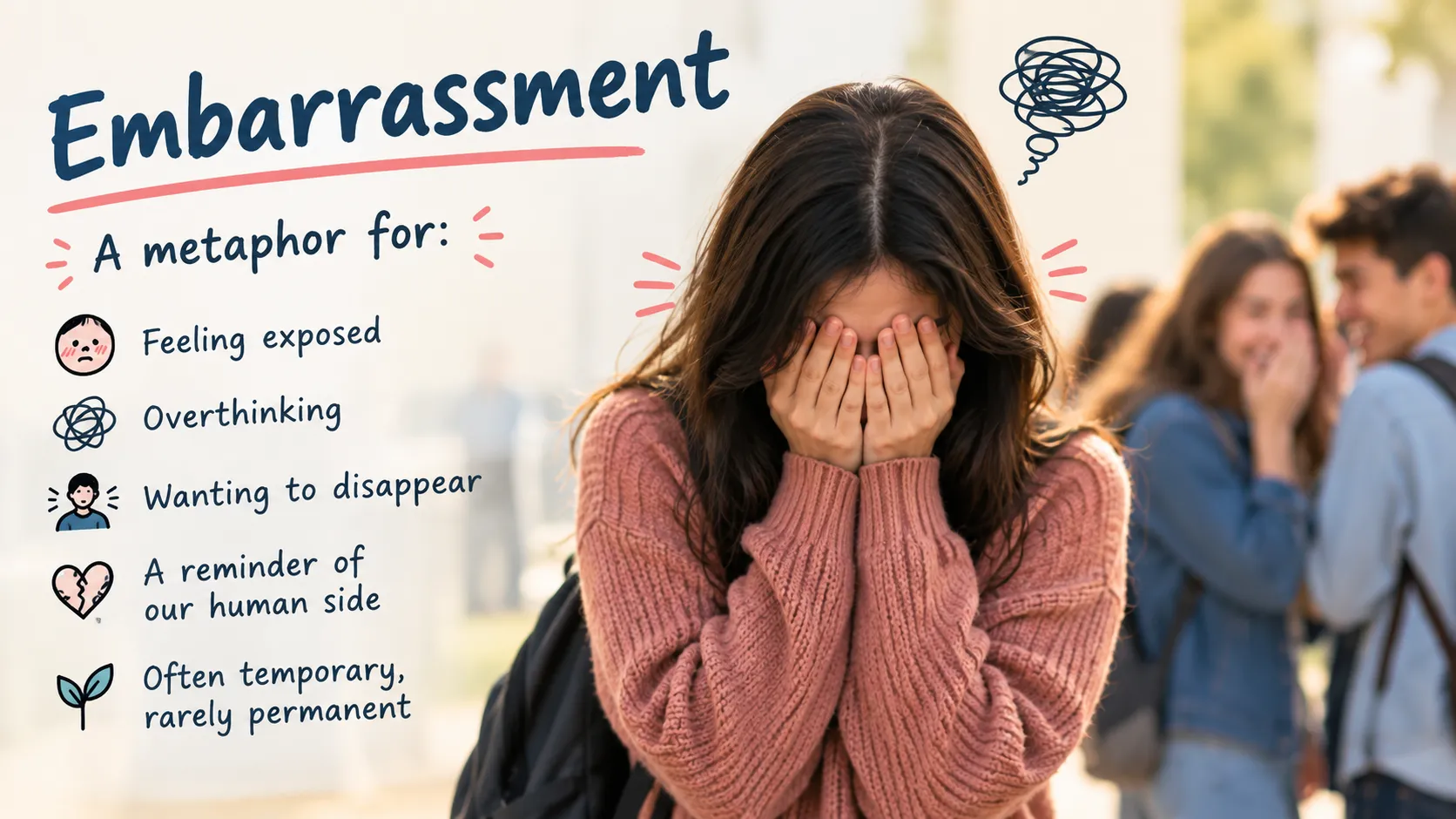
A metaphor for embarrassment describes that hot, shrinking feeling by comparing it to something physical, so readers sense it at once. Picture a burning cheek for sudden heat, a spotlight with no exit for exposure, a turtle pulling into its shell for the urge to hide, or a dropped tray in a silent room for public awkwardness. Each image gives a private feeling a shape.
Strongest Metaphor for Embarrassment
Embarrassment is a spotlight with no exit. Suddenly everyone seems to be looking, and nowhere feels safe to step. Light usually helps us see, but here it exposes, which is exactly how the feeling works. Readers recognize the moment at once. That mix of attention and helplessness is the heart of embarrassment. Other strong choices include a burning cheek (physical heat), a trapdoor in the floor (wish to vanish), a shrinking balloon (confidence draining out), a tight collar (squirming discomfort), and a red tide (blushing that spreads).
Metaphors for Embarrassment: 25 Examples and Meanings
This list mixes familiar expressions with original metaphors, and the original ones are marked so you always know which is which.
| Metaphor | Meaning | Metaphor | Meaning |
|---|---|---|---|
| A spotlight with no exit (original) | Exposed and trapped | A burning cheek (original) | Sudden facial heat |
| Egg on your face | Public humiliation | The ground swallowing you up | Wish to vanish |
| A trapdoor in the floor (original) | Wanting to disappear | A shrinking balloon (original) | Confidence draining away |
| A tight collar (original) | Squirming discomfort | A red tide (original) | Spreading blush |
| A turtle pulling into its shell (original) | Urge to hide | A dropped tray in a silent room (original) | Awkward public mistake |
| A knot in the throat (original) | Words stuck | Foot in mouth | Saying the wrong thing |
| A furnace behind the face (original) | Rising inner heat | A mirror that magnifies flaws (original) | Harsh self-view |
| A rewinding tape (original) | Replaying the moment | A stage with a stuck curtain (original) | Trapped in public view |
| A spilled drink on a white shirt (original) | Visible, lasting mistake | A deer in headlights | Frozen when caught |
| A sinking stone (original) | Heavy stomach drop | A clumsy shadow (original) | Awkwardness that follows |
| A peeled layer of armor (original) | Sudden vulnerability | A hot seat | Uncomfortable scrutiny |
| A fire alarm in the chest (original) | Racing heartbeat | A stain that fades (original) | Sting softening with time |
| A story you laugh at later (original) | Humor after healing | A cooling ember (bonus, original) | Heat turning to calm |
These metaphors work because each one links a concrete image to a feeling. A spotlight with no exit is cold, bright, and public, so it suggests exposure. By contrast, a turtle pulling into its shell is small and private, so it suggests retreat.
Metaphors for Embarrassment and What They Express
Heat and the Body
These images focus on what the body does, and writers choose them when they want readers to feel the blush instead of just hearing about it.
Embarrassment is a burning cheek. Heat climbs the face in a second, and the person cannot stop it. This image makes the feeling physical and instant.
One wrong name, and a burning cheek gave her away to the whole table.
Embarrassment is a furnace behind the face. Warmth builds from the inside, as if someone flipped a switch. The picture suits longer, slower waves of discomfort.
A furnace behind his face kept roaring long after the laughter ended.
Embarrassment is a fire alarm in the chest. The heart pounds, and every nerve says something went wrong. Readers feel alarm, not only awkwardness.
When the wrong slide appeared, a fire alarm went off in her chest.
Embarrassment is a knot in the throat. Words tighten and refuse to leave. This metaphor fits moments when speech simply stops.
He opened his mouth to explain, but a knot in his throat held every word hostage.
Exposure and Being Watched
Here the focus is being seen, so these metaphors suit stories about speeches, classrooms, and public mistakes.
Embarrassment is a spotlight with no exit. The light seems to follow every move. Escape feels impossible, which makes the moment feel longer.
Standing at the podium, he felt a spotlight with no exit lock onto his shaking hands.
Embarrassment is a dropped tray in a silent room. The crash is loud, and then every head turns. It captures how small mistakes grow when everyone hears them.
The cup slipped, and the whole café became a dropped tray in a silent room.
Embarrassment is egg on your face. This familiar expression pictures a mess that everyone can see but you. It adds a note of humor to public blunders.
She left the meeting with egg on her face and a plan to fix it.
Embarrassment is a hot seat. Everyone waits, and every answer matters. The image suits pressure that feels like judgment.
Under the manager’s stare, the chair became a hot seat, and every second counted.
Hiding and Disappearing
Some people feel an urge to vanish, and these images capture that wish for readers who want a quiet, shrinking mood.
Embarrassment is a turtle pulling into its shell. The head tucks in, and the world shuts out. It suggests retreat as a way to feel safe.
After the joke fell flat, he became a turtle pulling into its shell, eyes on his shoes.
Embarrassment is a trapdoor in the floor. Many people wish for a sudden drop that ends the moment. The picture adds a touch of dark humor.
She scanned the stage for a trapdoor in the floor that never opened.
Embarrassment is the ground swallowing you up. Familiar and a bit playful, this phrase names the wish to disappear completely.
In that silent hall, I prayed for the ground to swallow me up.
Embarrassment is a shrinking balloon. Confidence slowly leaks out, and the person feels smaller each second. Gradual deflation is exactly what this image shows.
Every raised eyebrow let more air out of the shrinking balloon he had become.
Self-Judgment and Replay
After the moment passes, the mind often keeps going, so these metaphors suit writing about overthinking and regret.
Embarrassment is a rewinding tape. The scene plays again and again, always stopping at the worst part. This image captures overthinking at night.
At midnight, the rewinding tape in her head returned to the same sentence.
Embarrassment is a mirror that magnifies flaws. Small slips look huge, and the person sees only what went wrong. The image explains harsh self-talk.
In that mirror that magnifies flaws, a tiny stumble looked like a disaster.
Embarrassment is a sinking stone. The stomach drops, and heavy dread settles in. This metaphor gives the feeling weight.
A sinking stone in her stomach told her the email had already been sent.
Embarrassment is a clumsy shadow. The awkward moment follows you from room to room. It suits stories where one mistake lingers.
All week, a clumsy shadow trailed him through the hallways.
Healing and Humor
Time often softens the sting, and these images help writers show relief, growth, and laughter.
Embarrassment is a stain that fades. At first it looks permanent, then it slowly lightens. The picture offers quiet hope.
By spring, the stain that had seemed so permanent was barely visible.
Embarrassment is a story you laugh at later. Pain turns into a funny tale after enough time. It shows how humor can heal.
The mistake that once felt endless is now a story we laugh at later, told with a grin.
Embarrassment is a cooling ember. The glow fades, and warmth drains away. This image suits closing lines in a poem or scene.
By evening, the cooling ember in his cheeks had finally turned to calm.
Embarrassment is a peeled layer of armor. The shell drops, and tenderness shows. It suggests that vulnerability can lead to connection.
When her armor peeled away, her friends only drew closer.
Metaphors for Embarrassment and Growth
Embarrassment hurts, yet it often teaches more than praise does. Writers use growth metaphors to show that a red face can lead to a stronger person.
These images work well in essays, graduation speeches, and personal stories. They let readers feel the sting first and the lesson second.
Embarrassment is a rough teacher. It asks no permission and leaves a lesson behind. The sting makes that lesson hard to forget.
That rough teacher taught me to check the email twice before I hit send.
Embarrassment is a seed in hard soil. Something small and uncomfortable can still grow into confidence. The image carries patience and hope.
What felt like a seed in hard soil became the courage to speak up the next time.
Embarrassment is a stepping stone made of stumbles. Each slip becomes a place to stand a little higher. It suits stories about learning in public.
Every stumble turned into a stepping stone, and by June she was leading the meeting.
Positive and Negative Metaphors for Embarrassment
Not every metaphor for this feeling is warm or kind, and writers also use darker images.
Positive or gentler metaphors
- A stain that fades: pain softening over time
- A story you laugh at later: humor after the sting
- A peeled layer of armor: honesty that invites closeness
- A rough teacher: lessons learned the hard way
- A cooling ember: heat slowly turning into calm
Negative or darker metaphors
- A spotlight with no exit: trapped and fully exposed
- A sinking stone: heavy, stomach-dropping dread
- A mirror that magnifies flaws: harsh, unfair self-judgment
- A trapdoor in the floor: desperate wish to vanish
- A rewinding tape: regret replaying without any rest
Darker metaphors work best in fiction, poetry, memoir, and other emotional writing, where readers expect the feeling to sting.
Five Simple Metaphor Examples for Embarrassment
These five are the easiest picks for an assignment, a speech, or a short piece of writing.
- A burning cheek: sudden heat in the face
- A spotlight with no exit: feeling watched and trapped
- A turtle pulling into its shell: wanting to hide away
- A sinking stone: heavy dread in the stomach
- A stain that fades: sting that softens over time
Together, the five cover different meanings instead of repeating one idea.
Metaphor for Embarrassment and Blushing
Blushing is the most visible sign of embarrassment, so the best images use color, heat, and spreading motion. Choose pictures that show the change happening on the face, not just the result.
- A red tide: color rising across the face
- A burning cheek: heat that appears instantly
- A furnace behind the face: warmth building from within
- A sunset on the skin: color deepening slowly
A red tide crept up his neck and flooded his ears before he could speak.
Metaphors for Public Embarrassment
Embarrassment in public has an audience, so good metaphors include eyes, light, or sound. These images help readers feel watched.
- A spotlight with no exit: exposure with nowhere to run
- A dropped tray in a silent room: one mistake everyone hears
- A stage with a stuck curtain: trapped in public view
- A hot seat: pressure with every eye on you
The microphone squealed, and the room became a stage with a stuck curtain.
Embarrassment Metaphor Poem Ideas
A poem works best when one central image carries the whole poem instead of a new comparison in every line. Here is an original example poem built on a single metaphor.
I tucked my head and became a shell. The room was loud, but I was small. My face was hot, my words went still. Then someone laughed with me, not at me, and the shell grew soft enough to open.
Watch how the shell image develops. It begins with hiding, moves through a loud and frightening room, and ends with kindness softening the walls. A writer could build a second poem on a stain that fades, letting time slowly lighten the feeling.
What Does Embarrassment Symbolize?
Embarrassment most often symbolizes vulnerability, exposure, self-awareness, fear of judgment, the wish to belong, and humility. Context shapes the meaning. In a school story, a red face may stand for the fear of not fitting in. In a story about a leader, an embarrassing mistake can symbolize humility and growth. Comedy often uses it to stand for human imperfection that everyone shares. Even a small detail, like a dropped book, can carry that meaning. Because the feeling is so common, readers connect with it quickly and forgive the character. Look at who is watching and how the character reacts, and the symbolism becomes clearer. For example, a character who laughs along with the room shows self-acceptance, while one who flees shows fear of judgment.
What’s a Fancy Way of Saying Embarrassment?
If the plain word feels too ordinary, these alternatives add tone and variety.
- Mortification: intense and formal
- Chagrin: formal, slightly literary
- Humiliation: stronger and more painful
- Self-consciousness: neutral and psychological
- Abashment: old-fashioned and poetic
- Discomfiture: formal, a little stiff
- Awkwardness: casual, everyday tone
- Sheepishness: warm and gently humorous
Choose formal words for essays, poetic ones for verse, and light ones for friendly, everyday writing.
What Are Some Idioms About Embarrassment?
- Egg on your face: Visibly embarrassed by a mistake.
- Wish the ground would swallow you up: Want to disappear from shame.
- Red as a beetroot: Blushing very deeply.
- Put your foot in your mouth: Say something awkward by accident.
- Lose face: Suffer damage to your reputation.
- Hang your head in shame: Show deep embarrassment or regret.
Metaphor vs. Simile for Embarrassment
Metaphor: Embarrassment is a spotlight with no exit.
Simile: Embarrassment feels like a spotlight with no exit.
A metaphor says one thing is another, while a simile says one thing is like another. Metaphors feel bolder and more direct, so they suit poems and strong emotional moments. Similes feel gentler and clearer, which helps in simple essays or when readers need the comparison explained.
Choosing the Right Metaphor for Embarrassment
Choose the image according to the feeling you want your reader to experience.
| If embarrassment means… | Choose imagery such as… | Best for… |
|---|---|---|
| A physical blush | A burning cheek, a red tide, a furnace behind the face | Descriptive writing and fiction |
| Being watched | A spotlight with no exit, a hot seat | Speeches and school stories |
| A public blunder | Egg on your face, a dropped tray in a silent room | Humor and personal essays |
| Wanting to hide | A turtle pulling into its shell, a trapdoor in the floor | Poems and character moments |
| Losing confidence | A shrinking balloon, a peeled layer of armor | Emotional writing |
| Overthinking | A rewinding tape, a mirror that magnifies flaws | Memoir and reflective essays |
| Heavy dread | A sinking stone, a fire alarm in the chest | Tense, suspenseful scenes |
| Healing and humor | A stain that fades, a story you laugh at later | Endings and uplifting pieces |
The strongest metaphor is the one that communicates your meaning without a long explanation.
Frequently Asked Questions
What is a good metaphor for embarrassment?
A strong choice is a spotlight with no exit, because it shows both exposure and the feeling of being trapped. For something more physical, try a burning cheek, which captures the sudden heat of a blush. Pick the image that fits the moment you are describing, whether it is public, private, or lingering.
What are five metaphor examples for embarrassment?
Five easy examples are a burning cheek, a spotlight with no exit, a turtle pulling into its shell, a sinking stone, and a stain that fades. They cover heat, exposure, hiding, dread, and healing. That range makes them handy for class assignments, speeches, and short stories.
What is embarrassment a metaphor for?
Writers often use embarrassment to stand for vulnerability, fear of judgment, and the wish to belong. It can also point toward humility and growth, depending on how a character responds. The surrounding scene decides the meaning, so a blush at a funeral reads very differently from a blush at a party.
What’s a fancy way of saying embarrassment?
Try mortification for strong, formal feeling, or chagrin for a literary touch. Self-consciousness works in calm, neutral writing, while sheepishness adds warm humor. Tone is your guide, so match the word to the mood of your sentence.
What is a good metaphor for feeling embarrassed in public?
A dropped tray in a silent room pictures one small mistake that everyone hears. A stage with a stuck curtain shows the feeling of being trapped in view. Both images help readers sense the audience, which is what makes public embarrassment so sharp.
How do you describe a blush in writing?
Show what the face does instead of naming the feeling. A cheek can burn, a red tide can climb the neck, or a furnace can glow behind the skin. Add one small detail, like lowered eyes, and the reader will feel the moment without a long explanation.
Final Takeaway
The best metaphors for embarrassment let readers feel the moment, not just hear about it. A burning cheek carries sudden heat, a spotlight with no exit carries exposure, a turtle pulling into its shell carries the urge to hide, and a stain that fades carries healing. For a poem, build around one image and let it change as the feeling softens. In an essay, pick a metaphor that matches your main point, then explain it in a sentence. For emotional writing, keep the image small, honest, and close to a real moment. Choose the metaphor that makes your reader feel the heat, and the relief that follows.

Abdullah writes about the quiet power of figurative language.
For him, a metaphor is not decoration — it is a bridge between hearts.
He built WishNeste to help every writer find the words they were searching for.